NewsAI-prepared · review pendingMedicineNew
Face-photo AI research reports cancer survival associations, without proving treatment benefit
Mass General Brigham announced FAHR-Face research published in The Lancet Digital Health; survival associations do not show that using the tools improves treatment.
Evidence: 3 sources · 1 official record · 1 independent report · 1 research paper · 2 open questions
AI-prepared draft. Human editorial review is pending. This story does not claim human verification.

What happened
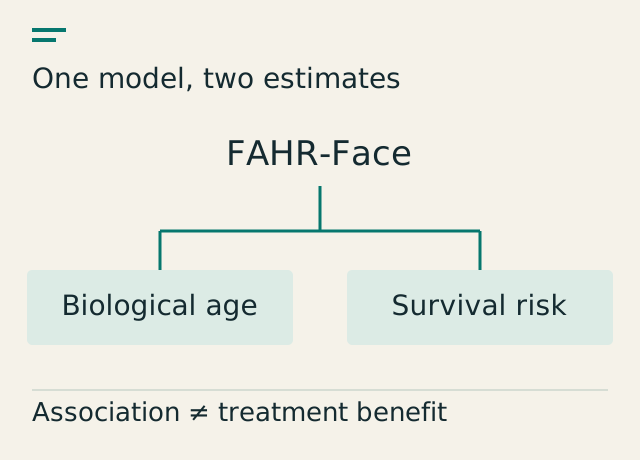
- The 19 October study describes FAHR-FaceAge and FAHR-FaceSurvival, derived from one foundation model.
- The institution reports an association between estimated facial age and survival, and external validation of combined measures.
Why it matters
A cheap input could be useful in assessment only if its predictions are reliable across patients and lead to better decisions.
What is confirmed and what is claimed
Supported by listed sources
Claimed, not independently verified
- The researchers report that the models capture complementary information and tolerate common variations in photographs. 1
The news is the research announcement, not a new diagnostic service. The two tools estimate different quantities: biological age and survival risk. Neither gives a certain outcome for an individual.
The institution discloses a provisional patent application involving several researchers. Prospective clinical evaluation, calibration and performance across demographic groups matter before such estimates guide treatment. Readers should not interpret a photograph-based estimate as medical advice.
What we don’t know yet
- The full journal text was inaccessible in this source check; detailed performance and subgroup claims are not verified here.
- This coverage establishes neither regulatory authorization nor improved patient outcomes.
Evidence and sources
- Primary announcement FAHR-Face research announcement
- Independent reporting Mass General Brigham AI trained on faces
- Peer-reviewed study FAHR-Face: model development and validation study