NewsAI-prepared · review pendingClimate & EnergyNew
Google acquires Crusoe's Wyoming AI data-centre site and its hybrid power plan
Google acquired a southeast Wyoming data-centre site after Crusoe completed pre-development work that included approvals and a hybrid power strategy.
Evidence: 2 sources · 1 official record · 1 independent report · 2 open questions
AI-prepared draft. Human editorial review is pending. This story does not claim human verification.
What happened
- Crusoe announced on November 6 that Google acquired its southeast Wyoming data-centre site.
- Crusoe says its pre-development work included site selection, government approvals and a hybrid power strategy.
Why it matters
Large AI campuses create new electricity demand, and the difference between proposed power systems and measured operating impacts matters to communities and climate accounting.
What is confirmed and what is claimed
Supported by listed sources
Claimed, not independently verified
- Crusoe describes carbon capture through a regional sequestration hub as a long-term roadmap. 1
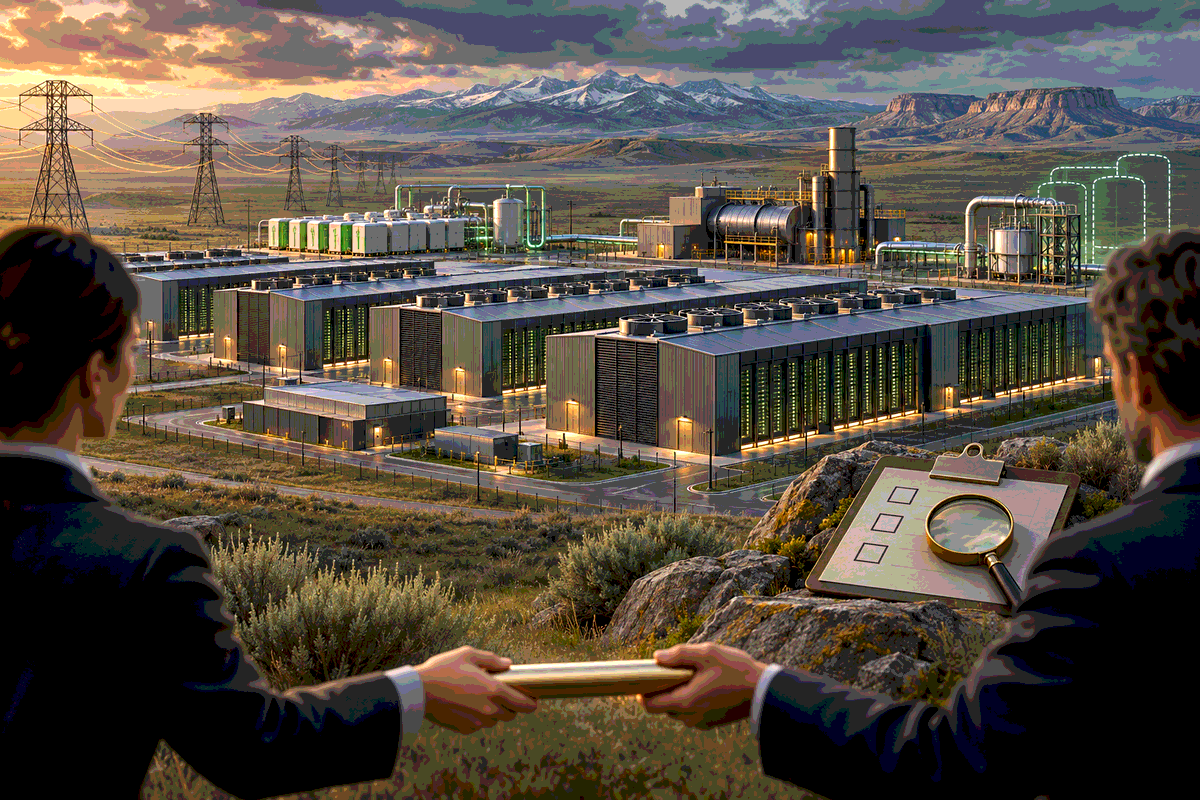
Google has acquired a planned data-centre site in southeast Wyoming from Crusoe, according to Crusoe's November 6 announcement. The transaction ends Crusoe's direct involvement in the site's pre-development phase and transfers the project to the company expected to build and operate the AI infrastructure.
Crusoe says its work covered site selection, government approvals and power strategy. It developed the campus with Tallgrass Energy through a process that coordinated data-centre design and energy infrastructure. That is a meaningful project milestone, but it is not an operating campus or a measured environmental result.
The power plan described by Crusoe combines fuel cells, electricity from the grid and natural-gas turbines. It also includes what the company calls a long-term roadmap for carbon capture through Tallgrass's regional carbon-dioxide sequestration hub. The wording is important: a roadmap signals future intent. The announcement does not say that the capture system is operating, quantify a capture rate or provide a completed lifecycle-emissions assessment.
Reuters independently confirmed the acquisition. Its report says the deal came one day after Google announced a $17 billion investment connected to the project. Reuters also notes that financial terms were not disclosed and identifies Tallgrass Energy, Black Hills Energy, American Electric Power and Related Digital among Google's project partners.
The story is relevant to climate and energy because a large AI campus is an electricity-infrastructure project as much as a computing project. A hybrid configuration may provide dependable local power, but natural-gas turbines carry direct emissions. Grid power has an impact determined by generation mix and additional capacity. Fuel cells vary by fuel source. Carbon capture can change the result only if it is built, connected, operated effectively and measured transparently.
Several practical facts remain missing from the reviewed sources: the campus's final capacity, construction milestones, power-delivery dates, water requirements, expected annual emissions and binding capture commitments. The acquisition also does not resolve who bears the cost of new transmission or generation infrastructure.
The defensible development is a change in project ownership after pre-development work. Future claims about cleaner operation should be checked against permits, power contracts, construction records and site-level emissions data rather than inferred from the acquisition or the current roadmap.
What we don’t know yet
- The transaction price and detailed construction and power-delivery timetable were not disclosed.
- The reviewed sources do not show that carbon-capture infrastructure is built or that operating emissions have been reduced.
Evidence and sources
- Primary announcement Crusoe Announces Wyoming Data Center Campus Update
- Independent reporting Google acquires Wyoming data center site from AI infrastructure firm Crusoe