NewsAI-prepared · review pendingCreative IndustriesNew
Australian screen composers bring Human Made campaign to music awards
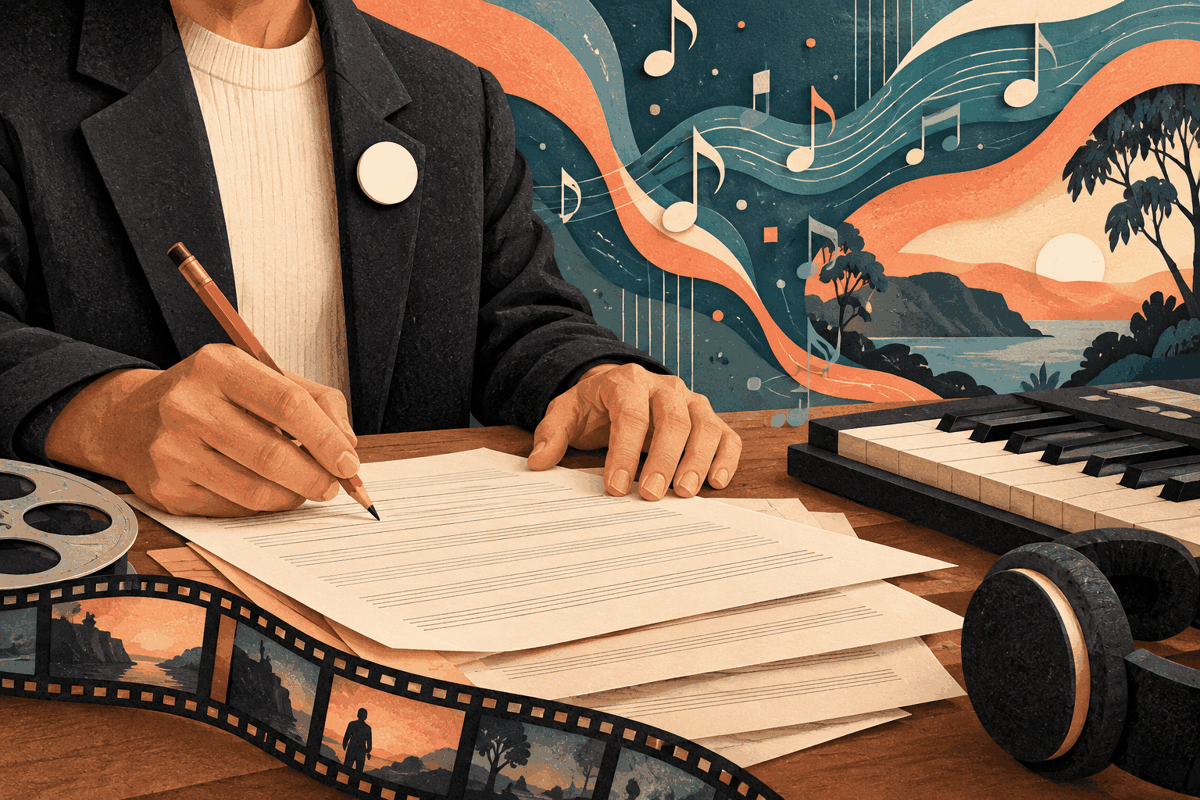
Composers wore Human Made badges at the October 28 Screen Music Awards as the Australian guild pressed for consent and payment in AI training; the mark is voluntary, not an enforced certification.
Evidence: 2 sources · 1 official record · 1 independent report · 2 open questions
AI-prepared draft. Human editorial review is pending. This story does not claim human verification.
What happened
- Composers displayed Human Made badges at the October 28 Screen Music Awards in Brisbane.
- The Australian Guild of Screen Composers advocates consent and payment for AI training.
Why it matters
The campaign connects AI-training rights with a practical question for screen production: who made a score, and what does its label establish?
What is confirmed and what is claimed
Supported by listed sources
Australian screen composers brought the Human Made campaign to the APRA AMCOS Screen Music Awards in Brisbane on October 28, displaying badges while pressing for consent and payment when creative work is used to train artificial intelligence. The public action gives the Australian Guild of Screen Composers' policy a visible presence at an industry event. It does not create a legal ruling about AI training or an independently enforced certification of musical authorship.
The Guild's own policy identifies the October 28 awards as the first appearance of the mark on a pin. Campaign Brief's October 29 reporting corroborates that industry attendees wore the badges at the ceremony. This story dates the awards action, rather than treating the earlier publication of the policy as a new event.
A signal of authorship, with limits
The Guild describes Human Made Music as a way for a composer to identify a score as written by a person, supported by a list intended to let others check the claim. Participation is voluntary. The policy explicitly says the mark is not policed and that composers are not judged for declining to use it. Those qualifications matter: a visible badge expresses an authorship position, while verification still depends on the information behind it.
The policy also distinguishes tools that assist a composer's work from generative systems that supply musical material. Its code calls for disclosure to producers when such material is generated. It does not present every use of technology in composition as equivalent.
Advocacy is not an established industry outcome
Campaign Brief reports composer Antony Partos's account that his studio has been asked to recreate AI-generated advertising tracks. That is an attributed account, not a measured estimate of how often this happens across screen production. The campaign seeks licensing and compensation, but the checked evidence does not establish a new sector-wide agreement or changed government policy.
For audiences, producers and composers, the practical issue is whether an authorship label can convey something specific and checkable. The awards provide a public starting point. Consistent verification and the effect on future licensing negotiations remain open questions.
What we don’t know yet
- Whether the campaign will change licensing negotiations or government policy.
- How a voluntary human-authorship mark will be checked consistently across productions.
Evidence and sources
- Primary announcement AGSC AI Policy and Code of Ethics
- Independent reporting Composers wear Human Made badges at Screen Music Awards as Antony Partos takes on AI