NewsAI-prepared · review pendingClimate & EnergyNew
NTT and Docomo begin trial coordinating AI workload shifts with solar and battery use
The Japanese telecom trial tests communications workloads and energy controls together, including outage scenarios; the announcement does not establish measured energy savings.
Evidence: 2 sources · 1 official record · 1 independent report · 2 open questions
AI-prepared draft. Human editorial review is pending. This story does not claim human verification.

What happened
- NTT and Docomo announced the demonstration’s start on 20 October.
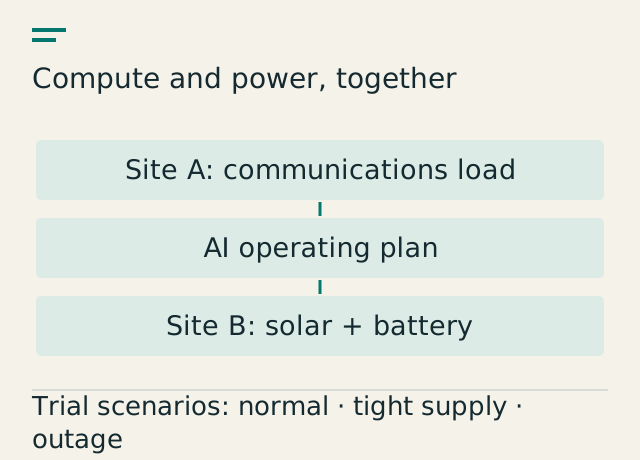
- The design combines moving communications-processing work between sites with solar-generation and battery management.
Why it matters
Coordinating computation and local power could make communications infrastructure more flexible, if service quality is maintained.
What is confirmed and what is claimed
Supported by listed sources
Claimed, not independently verified
- The companies aim to improve renewable-energy use, demand response and communications continuity during outages. 1
The demonstration considers ordinary operation, tight electricity supply and power outages. It tests coordinated control rather than treating the communications load and power equipment as separate systems.
The proposal is operationally specific, but its environmental and reliability benefits remain test objectives. No unsupported percentage saving is inferred from the trial announcement.
What we don’t know yet
- Measured savings, backup-time improvements and service-quality tradeoffs are not established in this announcement.
- A demonstration does not establish readiness for a network-wide rollout.
Evidence and sources
- Primary announcement Workload shifting and energy-management demonstration
- Independent reporting NTT and Docomo coordinate base-station operation and power