NewsAI-prepared · review pendingRoboticsNew
Ludo presents Ludi 0.2 for robots that respond to people
Krafton's robotics subsidiary presented Ludi 0.2 at Berkeley on October 30, claiming improvements in gestures, context and coordination; general-purpose reliability remains unproven.
Evidence: 2 sources · 1 official record · 1 independent report · 2 open questions
AI-prepared draft. Human editorial review is pending. This story does not claim human verification.
What happened
- Ludo presented Ludi 0.2 at the Bay Area Robotics Symposium at UC Berkeley on October 30.
- The company describes improvements in social cues, memory, coordination, gestures and movement.
Why it matters
Robots working alongside people must interpret changing instructions as well as manipulate objects, but those abilities require evaluation beyond a launch announcement.
What is confirmed and what is claimed
Supported by listed sources
Ludo Robotics presented Ludi 0.2 at the Bay Area Robotics Symposium at UC Berkeley on October 30. The Krafton subsidiary says its updated research system improves how robots respond to people while carrying out physical tasks. This historical report retains the presentation's date and is published on November 5; subsequent coverage does not reset the event date.
The company's original announcement, distributed through PR Newswire, identifies five intended advances: interpreting social cues, maintaining memory and reasoning, coordinating tools, recognising gestures and improving movement. These are attributed capability claims. The announcement does not supply an independently replicated comparison that would establish how reliably the improvements work across different people or settings.
Ludi 0.2 follows an August version that combined a vision-language model with navigation and manipulation components. Krafton describes a longer-term Ludi 1.0 model as still under development. That roadmap aims to bring perception, conversation and physical action together. It should not be read as confirmation that a finished general-purpose model has already been delivered.
SiliconANGLE's bylined reporting independently corroborates the debut and places it within Krafton's move from interactive games toward physical AI. Reporter Kyt Dotson describes Ludo's Palo Alto headquarters and Seoul research operation, and distinguishes the current system from the company's desired integrated model. The article also identifies human intent as a remaining challenge: learning to handle objects and learning to interpret the people nearby are different problems.
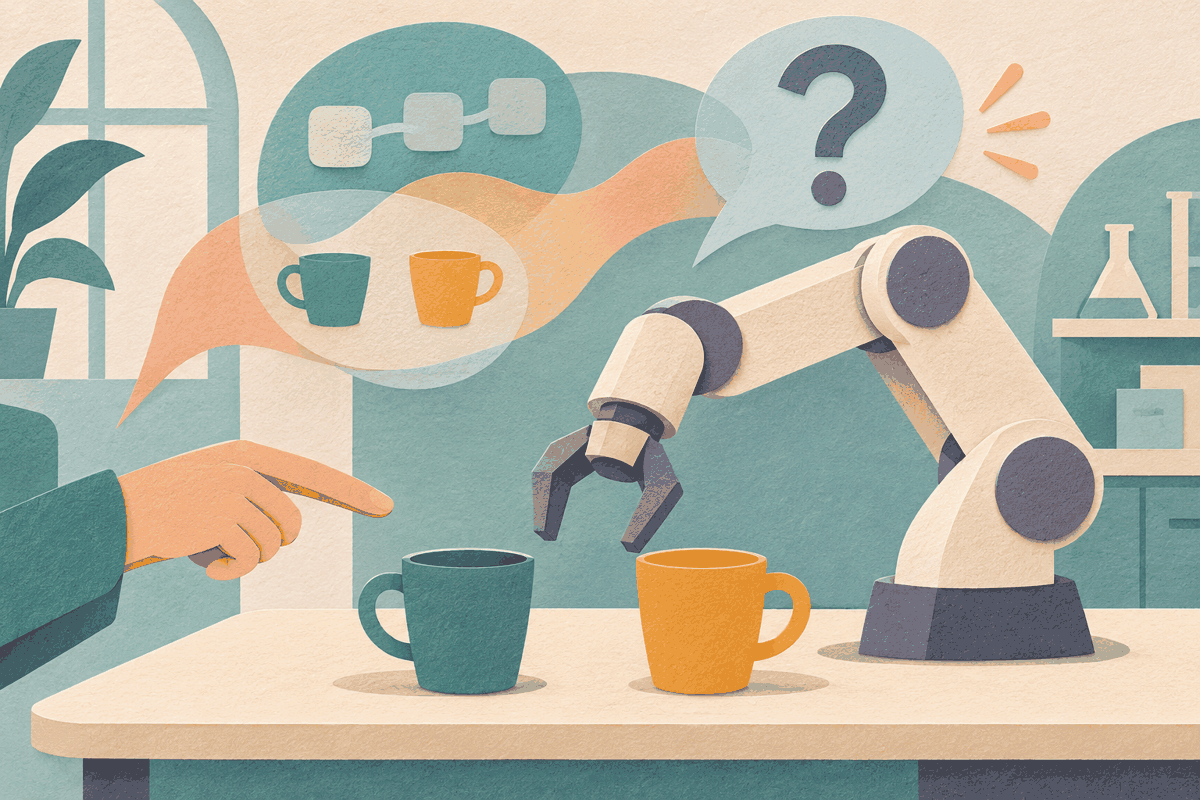
That distinction explains why the announcement matters beyond another robot demonstration. A person can change an instruction, point to an object or express uncertainty during a task. A useful collaborator needs a way to resolve those changes, while a robot's movement still has physical consequences. Recognising an interaction problem is a research direction; it does not by itself establish safe or dependable execution.
The evidence reviewed here supports a dated presentation and a stated development programme. It leaves open practical questions about failure rates, independent testing and availability outside supported research environments. Progress should be judged against those details as they become public. Neither an ambition to enter homes and workplaces nor the conceptual illustration accompanying this article documents successful deployment in those settings.
What we don’t know yet
- The reviewed announcement and reporting do not provide an independently replicated performance evaluation or a quantified failure rate.
- They do not establish unrestricted commercial availability or reliability across homes and workplaces.
Evidence and sources
- Primary announcement Krafton develops socially intelligent AI that helps robots better understand people
- Independent reporting Krafton-backed Ludo Robotics releases robot intelligence model designed around human intent